2026 sets new record for days with average gas price above $4
Fuel prices have surged since the beginning of President Donald Trump’s war against Iran in February.
2026 has now beat out 2022’s record for the most consecutive days with the U.S. national average gasoline price above $4.
It tied the record on Oct. 13 and passed it the next day, according to a post on X by Patrick De Haan, the head of petroleum analysis at fuel price tracker GasBuddy.
Prices were near $2.90 per gallon nationwide in February 2026, according to data from the U.S. Energy Information Administration. But after President Donald Trump kicked off his war with Iran, average prices skyrocketed, reaching $4 by the end of March. They briefly dipped below that mark over the summer, but have climbed back above it and remained there since mid-July.
Oct. 14 marked 158 consecutive days since the national average went back above that $4 threshold. The 2022 record of 157 days came after Russia’s invasion of Ukraine disrupted global oil markets.
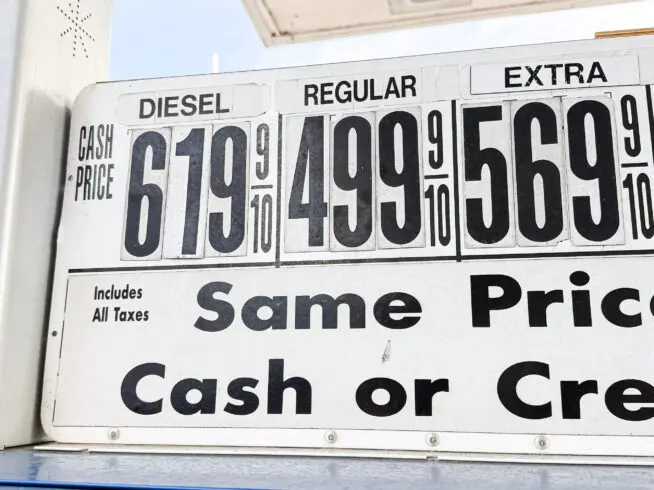
Regular unleaded gasoline was $1.26 higher than the same time last year, at $4.33 per gallon as of Oct. 14, according to data from AAA. In some states, that average was significantly higher — Alaska was at $4.98 per gallon, Hawaii was at $5.64, and California was at $6.26.
Diesel prices remained significantly elevated as well: The national average price for a gallon of diesel was $6.30 on Oct. 14, according to AAA. It was high as $8.41 in California.
De Haan posted to X on Oct. 13 that diesel prices in some states were likely to jump even past their current point in the near future as refineries began maintenance.
He wrote, “today GasBuddy counts 13 states where diesel averages below $6/gal, but in a week that could be cut by more than half.”
The Iran war has contributed heavily to elevated fuel prices. As much as 20% of the world’s crude oil supply passed through the Strait of Hormuz, between Iran and the Arabian peninsula, before the war. When Iran blocked shipping in the strait, that supply to the global economy was suddenly cut, sending fuel prices ever higher.
Other supply lines for crude oil in the region are under threat as well. In August, InvestingLive reported, citing an Iranian official, that Iran was planning to drive up fuel prices for Americans by striking Arabian Gulf oil pipelines and oil-loading terminals that bypass the Strait of Hormuz.
Saudi Arabia’s East-West Crude Oil Pipeline was disrupted by a drone attack last month that originated in Iraq, where pro-Iran armed groups operate, though they denied involvement, NBC News reported on Sept. 12. On Oct. 14, Iraqi Prime Minister Ali Faleh al-Zaidi assured Saudi Crown Prince Mohammed bin Salman that Iraqi territory would not be used for further attacks on Saudi oil infrastructure, according to al-Jazeera.
Iran-backed Houthi fighters in Yemen also reportedly hit a Saudi Aramco refinery on Oct. 6. On Oct. 13, another Houthi attack was reported to have struck Aramco’s headquarters in Dhahran, Saudi Arabia.
Earlier in October, Rutgers University supply chain management professor Rudi Leuschner told the American Independent that without an end in sight to the hostilities in the Middle East, high fuel prices could start driving up costs for food as well.
“Probably a three-month span of this, you might start noticing things,” Leuschner said.