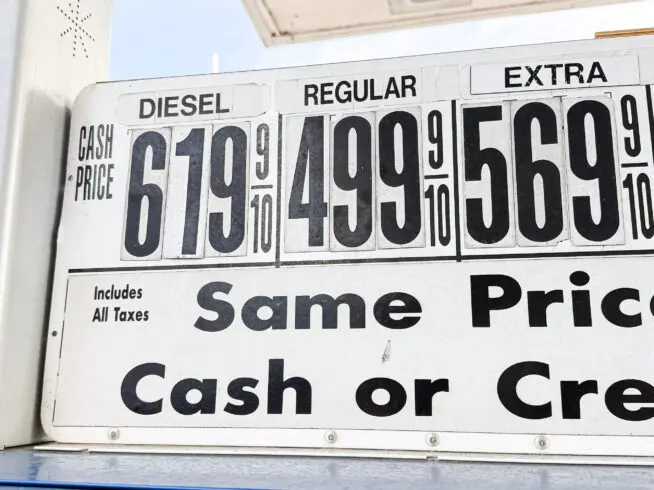
High diesel prices may soon raise grocery prices, expert warns
‘Probably a three-month span of this, you might start noticing things,’ said Rudi Leuschner, a supply chain management professor at Rutgers University.
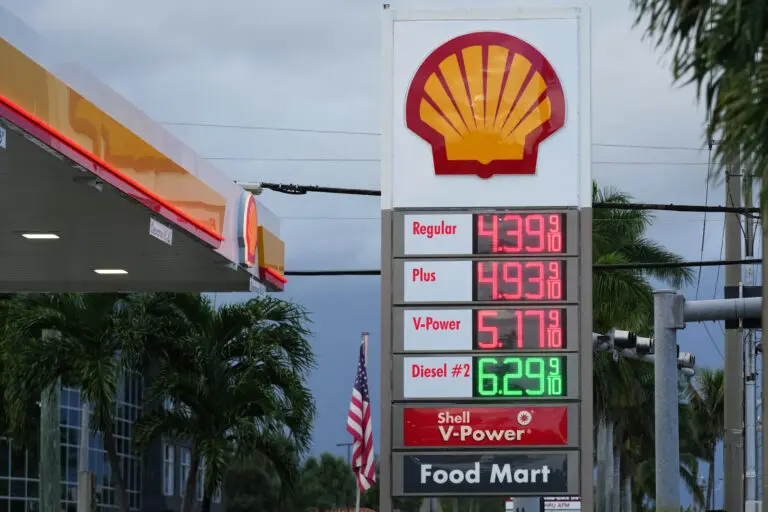
Surging diesel prices are causing problems for truckers and farmers across America. Soon, even motorists who have never touched a green fuel nozzle in their life will be feeling the pinch as well.
The national average price for a gallon of diesel fuel was about $6.38 as of Sept. 28, up from approximately $2.63 per gallon at the same time last year, according to the U.S. Energy Information Administration. Both gasoline and diesel prices have spiked since the start of President Donald Trump’s war against Iran in February.
While most passenger cars may not run on diesel, most farm tractors and semitrucks use the fuel. According to the Engine Technology Forum, some 97% of Class 8 tractor-trailers — the largest ones on the road — use diesel. The group estimates 75% of farm equipment uses diesel, and diesel engines are also responsible for pumping 20% of agricultural irrigation water.
According to the Independent Growers Alliance, as much as 15%-30% of the total price of food can be attributed to fuel. So while it may take time, skyrocketing diesel prices will make their way into everyday consumers’ grocery bills, said Rudi Leuschner, professor of supply chain management at Rutgers University.
“The companies that are selling those groceries or supermarket-type items are feeling the impact immediately. Now, of course, there is a little bit of an absorption layer, so to say, because nobody wants to blink first and start raising prices necessarily, because if their competitors are holding on and are not raising prices, then it’s not good for me if I can’t hold on as long,” he said.
That’s where things stand at the moment, according to Leuschner. While current consumer price index information for groceries is unavailable — the latest Bureau of Labor Statistics data on “food at home” is from August, and flat from the month prior — he said many food distributors and grocers are likely doing their best to stop prices from increasing too much on the consumer end, but that that will change if diesel prices remain elevated.
“If prices are coming back down quickly, they’ll probably just weather the storm,” Leuschner said. “Now, if it looks like it is prolonged, price increases are going to start trickling through.” He said that measurements of such increases are “backwards-looking” and done after the fact, but added, “Probably a three-month span of this, you might start noticing things.”
In August, InvestingLive reported, citing an Iranian official, that Iran was planning to systematically drive up fuel prices for Americans by striking Gulf oil pipelines to destroy routes used to bypass the Strait of Hormuz.
Saudi Arabia’s east-west oil pipeline was disrupted by a drone attack in September that originated in Iraq, where pro-Iran armed groups operate, though they denied involvement. Iran-backed Houthis in Yemen also reportedly struck a Saudi Aramco refinery on Oct. 6.
Leuschner noted that diesel fuel will soon face upward pressure from another source: winter.
“Diesel prices have a seasonal variation. They tend to be higher in winter versus summer because that’s when you switch on the demand of heating oil on top of it,” Leuschner said. ”That’s just a natural variation. You always see it bump up a little bit, by 20% or so. So even if none of the factors are changing anything, we might still see diesel prices going up.”