House passes bill that would cut program providing fruit and veggies for kids, new moms
The cut in funding to WIC was included in the House GOP’s annual agriculture appropriations bill for fiscal year 2027.
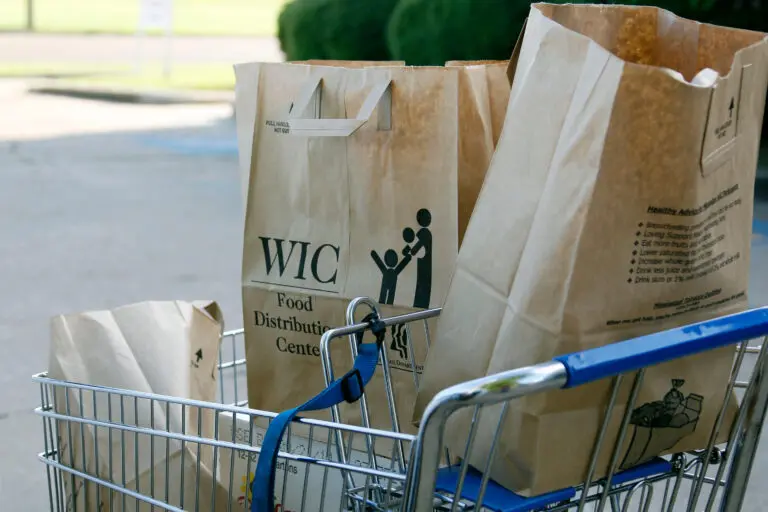
Food banks and anti-hunger groups across the country are speaking out against a proposed cut to a federal program that helps children, pregnant women and new moms get fruits and vegetables.
The Republican-controlled House of Representatives on June 4 narrowly passed an agriculture appropriations bill that would cut $141 million in benefits for nearly 5.4 million toddlers, preschoolers and pregnant and postpartum women who use the Special Supplemental Nutrition Program for Women, Infants and Children, according to the Center on Budget and Policy Priorities.
A coalition of 343 national, state, and community groups wrote to House leaders on June 1 that the Women, Infants and Children program, known as WIC, has received bipartisan support for more than three decades and needs full funding to provide nutritious food during the most essential stages of a child’s development.
Some House Republicans said the bill provides enough funding because program participation is down, the Washington Post reported. “With lowered participation estimates and increased carryover funding, $8 billion will fully fund the program,” Maryland Republican Rep. Andy Harris, chair of the House Appropriations Subcommittee on Agriculture, said during a floor debate. “Let me say it one more time. Despite what the naysayers will claim, WIC is fully funded. No woman or their children will lose or be denied coverage.”
Advocates and experts disputed those numbers, telling the Post that the data covers a period that includes the fall government shutdown, which lowered participation. They said program participation has increased in recent years, and rising grocery prices are expected to cause more people to use the program, too.
The bill was approved by a vote of 213-210. North Carolina Republican Reps. Chuck Edwards, Virginia Foxx, Pat Harrigan, Mark Harris, Richard Hudson, Brad Knott, Addison McDowell, Tim Moore, Gregory Murphy, and David Rouzer voted yes, as did Democratic Rep. Don Davis. Democrats Alma Adams, Valerie Foushee, and Deborah Ross voted no.
None of the lawmakers who voted yes immediately responded to a request for comment for this story.
The bill now awaits consideration in the U.S. Senate.
According to a fact sheet issued by the National WIC Association, as of January 2026, about 259,000 North Carolinians were participating in the WIC program, including about 47% of infants born in the state.
Earline Middleton, executive director of the Eva Clayton Rural Food Institute in Henderson, told the North Carolina Independent in a phone interview that the WIC fruit and vegetable funding is good for children at the start of their lives, moms recovering from childbirth, and the local economy.
Middleton said the cut will harm many people: “We think it’s just a bad deal for our health, for the health of the mom, and the health of our children. We think it’s bad because it lessens the participation of our farmers into the local economy and also our grocery stores, because that’s where they go to purchase these items. So it’s very circular, not one straight line. It affects a lot of us.”
About 1 in 7 people in North Carolina were food insecure as of 2024, according to Feeding America data, including 1 in 5 children.
“If it passes the Senate, this bill will take millions of dollars in food support away from more than 250,000 infants, pregnant women, and new moms here in North Carolina. And the cuts directly reduce access to the fresh, healthy food young families need most — like locally-grown fruits, vegetables, and dairy,” said Ann Edmondson, executive director of Feeding the Carolinas, in an email.
“We absolutely understand the importance of strengthening agriculture funding; that investment is long overdue,” Edmonson continued. “But cutting funds that help families buy locally-grown produce and dairy products moves us in the wrong direction when it comes to supporting North Carolina farmers. At a time when food prices are painfully high, we need to strengthen the connection between local farms and families — not weaken it.”
An April analysis by the nonpartisan Center on Budget and Policy Priorities estimated that the $141 million cut would reduce fruit and vegetable benefits for 145,000 WIC participants in Michigan.
In an April press release, the National WIC Association told Congress, “Families are counting on you to protect the support they rely on every day.”
“The House proposal fails WIC families when they need help most. At a time when food costs are skyrocketing and families are facing deep economic uncertainty, this bill would reduce overall WIC funding and slash fruit and vegetable benefits for mothers and young children,” said National WIC Association president and CEO Georgia Mitchell in the release. “It would force WIC to turn away eligible families for the first time in 30 years, breaking Congress’ 30-year bipartisan commitment to full WIC funding.”