Tariff-driven price increases cloud upcoming holiday season
77% of Americans surveyed say they’ll alter their 2026 holiday gift-buying due to rising prices.

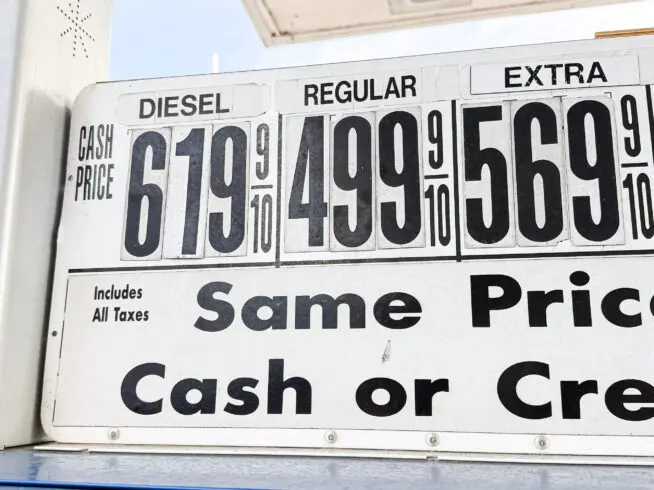
The high cost of groceries and gas has forced many Americans to change their spending habits in 2026, and tariff-driven price increases are expected to cut into their holiday spending, too, according to polling by the website Penny Hoarder.
Penny Hoarder’s report “The State of Holiday Spending in 2026” says that 77% of 1,000 American adults surveyed for the website on Aug. 8 by Pollfish plan to alter their holiday gift-buying strategy in response to rising prices, and 51% say the increased cost of living is creating severe financial anxiety as the end of the year approaches. However, 46% say they will buy gifts for their children regardless of the cost.
According to a New York Times report, 76% of toys and puzzles and 87% of Christmas decorations such as artificial trees, decorations and lights sold in the United States are manufactured in China.
President Donald Trump imposed a 145% tariff on imported Chinese goods in April 2025. During a Cabinet event that month, Trump told reporters that China had “made a trillion dollars” exporting goods to the United States under President Joe Biden. “Much of it we don’t need. You know, somebody said, ‘Oh, the shelves are going to be open.’ Well, maybe the children will have two dolls instead of 30 dolls. And maybe the two dolls will cost a couple of bucks more than they would normally,” Trump said. “They have ships that are loaded up with stuff, much of which, not all of it, but much of which we don’t need.”
Trade negotiations between the U.S. and China resulted in an agreement that temporarily reduced the tariffs on imported Chinese goods to 30% in May 2025.
Last month, a White House summit between Chinese leader Xi Jinping and Trump resulted in a “30-for-30” framework that cut import tariffs on a combined $60 billion worth of nonsensitive goods traded between the two countries.
Toys are the largest category of goods on the tariff relief list, accounting for approximately $9.8 billion of the $30 billion in identified U.S. imports. Glass and wooden Christmas ornaments, Nativity scenes and figures, and electrical filament Christmas-tree lamps also made the list, but artificial Christmas trees and toys enabled with radio frequency, Wi-Fi, Ethernet or Bluetooth did not.
The toy industry’s trade association, the Toy Association, celebrated the trade agreement. Bloomberg reported, however, that U.S. Trade Representative Jamieson Greer said on Oct. 1 that there is no set date for when the tariff agreement will be implemented, telling a meeting of G20 trade ministers in Milwaukee, “We have to stick to our legal processes.”
Even after the tariff agreement is implemented, the overall average U.S. tariff rate on goods imported from China will remain significantly higher than the 11% rate in effect before Trump’s return to the White House in January 2025, said Leah Fahy, a senior China economist at Capital Economics, PBS News reported in September.
Cliff Adler, co-president of Kurt S. Adler Inc., a New York City-based importer and wholesale distributor of holiday decorations and ornaments since 1946, told the American Independent that retail prices for Christmas items increased about 13% last year due to tariffs. He said that retailers have already purchased their inventory for Christmas 2026, so any tariff relief will have very little impact this year, and that changes in tariff policy make it difficult to price items.
“It’s just this uncertainty of the tariffs on, the tariffs off, they’re more, they’re high. You know, it creates uncertainty not only for us as the importer of holiday goods, but for the retailer.“ Adler noted that freight shipping rates have also increased due to the war in Iran and its pressure on fuel prices.
CNBC reported that, according to an October 2026 report by the Federal Reserve Bank of New York, Trump’s tariff policies increased the cost of everyday consumer goods by 2.9% from early 2025 through February 2026. It notes that without the new tariffs, consumer prices would have declined nearly 1% during that period.