Tariffs on imports are raising the prices of baby products for US consumers
Industry groups say most baby gear purchased by Americans is made in China.
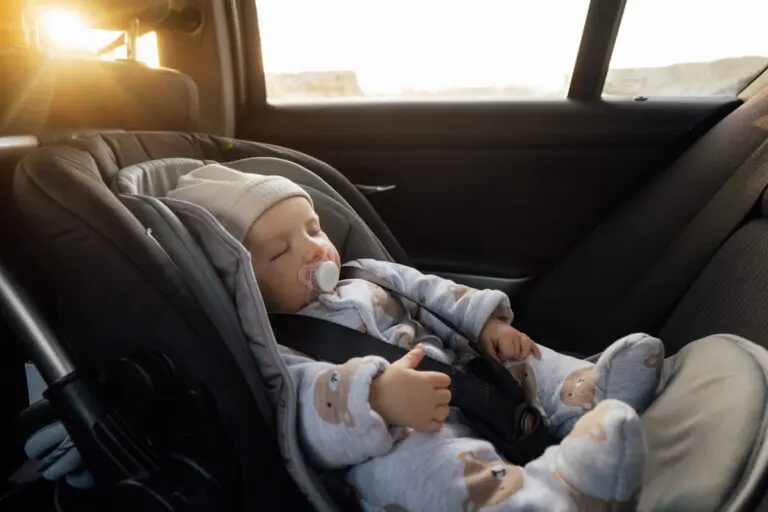
Tariffs imposed by the U.S. after President Donald Trump took office at the beginning of 2025 reached up to 145% on some imported Chinese goods, including baby products, before being lowered again. The majority of baby products purchased in the United States are made in whole or in part in China, including child safety products like car seats that parents are legally required to use when carrying a child in a motor vehicle.
A 2025 report from the minority party members of the Congressional Joint Economic Committee revealed that as a result of tariffs, the cost of five common items purchased for new babies — car seats, cribs, strollers, high chairs and baby monitors — increased by 24%, or $98 from April 1 to June 9, 2025. It estimated that if every new-parent household in the U.S. paid the higher prices, the additional cost would be $875 million that year.
“Not only are car seats essential, they are the law of the land,” Democratic Rep. Ayanna Pressley of Massachusetts said during a hearing of the House Financial Services Committee in May 2025, a few months after the early rounds of tariffs were put into place. “Now that cost is going up, because Trump has announced up to 145% tariffs on Chinese imported products,” she said. “Approximately 9 out of every 10 car seats in the U.S. come from China.”
Even before the new tariffs, raising children in the U.S. was not cheap. According to the digital parenting and pregnancy resource, BabyCenter, parents could expect to pay more than $20,000 in a baby’s first year, not including the cost of giving birth.
The Baby Safe Alliance, previously known as the Juvenile Products Manufacturers Association, sent a letter to Trump last year noting that tariffs on baby products would place an unnecessary burden on American families and result in fewer babies and toddlers having access to products critical for their safety.
“The results can be devastating when American families are forced to rely on secondhand or older products that do not meet current safety standards,” the letter said. “Worse, American parents often will fill the gap with makeshift alternatives that create risks to their children, or they will even go without protective products at all if safe products are not affordable or easily accessible.”
Joe Shamie, president of the U.S.-based Delta Children, one of the world’s largest makers of baby cribs, told Reuters in February that while it manufactures its finished products in the United States, it imports raw materials and parts.
“The tariff on cribs is somewhere around 45%, which has really increased the cost significantly for a young parent,” Shamie said. “At the same time, our domestic production of mattresses and other products have also been affected because the parts that we import from various countries, Canada and Asia, have also been tariffed. So our domestic production has been affected, as well as our overseas manufacturing have been affected. They have a negative effect on our business, our bottom line, and the affordability for a parent to raise children.”
Shamie said his company was exploring opportunities to make more items in the United States, but production was still years away. “The infrastructure for wheels, seats, steel, etc. are very complicated, and we’ll look at that as time goes on in the future,” he said.
After Trump’s summit in Washington in September with Chinese leader Xi Jinping, the White House announced a “30-for-30” framework that would cut tariffs on a combined $60 billion worth of nonsensitive goods imported between the two countries. The list includes Chinese-manufactured high chairs, booster seats, toys and child safety seats.