Gov. Stein vetoes ‘anti-voter’ elections bill
The Republican-backed bill would shorten early voting in primaries, permit challenges to early ballots after Election Day and expand the state auditor’s oversight.
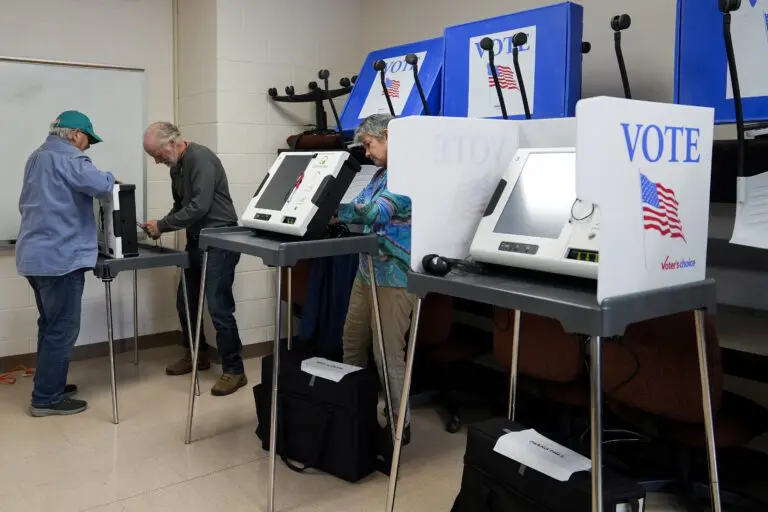
Gov. Josh Stein vetoed an elections bill on Aug. 17, saying it would make voting more difficult and make it easier for people to challenge early voting ballots after preliminary election results are known.
House Bill 958 would have cut early voting from 17 days to 10 days for primaries, runnoffs and certain special and municipal elections. The bill also would have added a post-election challenge period for ballots cast during in-person early voting. Any registered voter could challenge an early ballot cast in the same county until 5 p.m. on the third business day after an election. By then, election officials would have released unofficial results. The challenger would have to explain and prove why the voter was ineligible or why the ballot violated state law. The voter would then have a chance to respond to the county elections board.
The bill would also direct the state auditor to examine election systems and controls in randomly selected counties after election officials certify each general election. The auditor would review every county at least once every six years. Other changes would remove deceased voters from registration records more frequently and raise campaign finance reporting thresholds, allowing some donors’ contributions to go unreported until they reached higher donation amounts.
During a Protect Our Vote event at the executive mansion, where Stein issued the veto, he called the bill an attack on voter access. He argued that Republican lawmakers are passing laws to make it easier for them to throw out votes they don’t like and harder for voters to hold them accountable for decisions they’ve made.
“People like you power our democracy. I know it, you know it, and the General Assembly knows it,” Stein said. “That’s why legislators are trying to make it harder for you to vote and for your vote to count, because they know they have not delivered for you.”
Stein also criticized Republicans for leaving the state’s minimum wage unchanged for 17 years and focusing on divisive issues.
Democratic Senate Minority Leader Sydney Batch also spoke at the event, calling the bill out as a series of Republican-backed changes to North Carolina’s election laws. She said every year Republicans find a new way to restrict voter access: “In 2023, it was voter ID. In 2024, they took a hurricane relief bill, a bill meant to help families dig out of a disaster, and they buried yet another power grab deep inside the bill, handing over our elections to a partisan auditor. In 2025, it was the maps. Phil Berger and Destin Hall, taking their marching orders from Trump, redrew our congressional districts mid-decade just to squeeze out one congressional seat.”
Republicans who back the bill say it would improve voter roll accuracy, strengthen election administration and increase public confidence in elections.
In an Aug. 17 post on X, State Auditor Dave Boliek defended the proposed audits, writing: “Post-election audits are a commonsense, objective way to boost public confidence in our elections. These examinations of election systems and control are an additional layer of accountability that should be welcomed.”
The State Board of Elections said on its own website in 2021 that there had been no evidence of widespread voter fraud in North Carolina. Its audits of the 2024 general election found no fraud or other irregularities that could have affected the certified results.
The bill passed both chambers along party lines. The House approved the final version of the bill 62-47, and the Senate passed it 28-13.
Republicans could try to override the governor’s veto, but the state constitution requires support from three-fifths of the members present and voting in each chamber. No override vote has taken place as of Aug. 21.