What’s at stake in North Carolina’s Senate race
Democrat Roy Cooper and Republican Michael Whatley offer different approaches to healthcare, household costs, and Helene recovery.

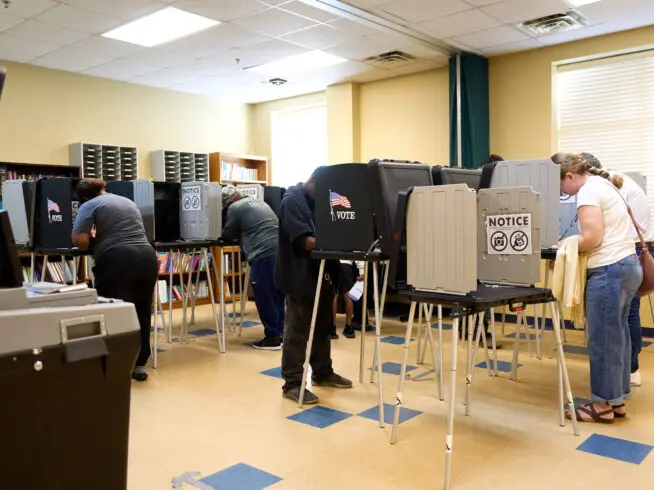
The direction of state policies concerning healthcare, housing and the economy is at stake as North Carolina voters prepare to choose their next U.S. senator.
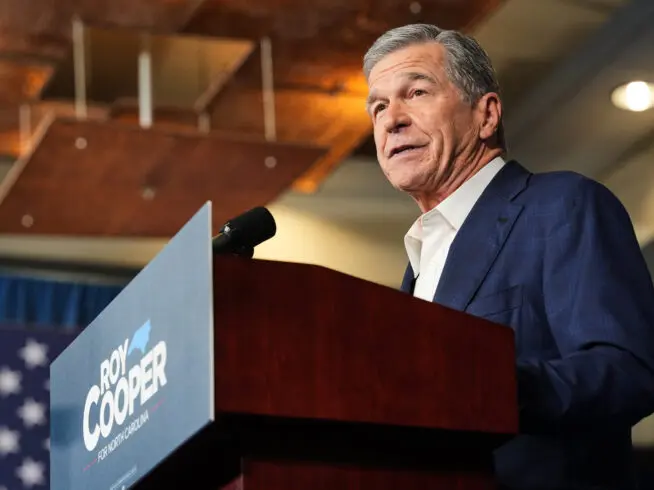
Democratic former Gov. Roy Cooper and former Republican National Committee Chairman Michael Whatley are running to replace retiring Republican Sen. Thom Tillis. Early voting gets underway on Oct. 15.
Cooper and Whatley have both promised to address the increasing challenges North Carolinians are facing in paying their household expenses, but their approaches differ greatly.
Cooper emphasizes lowering household costs through more consumer protections, providing more affordable housing, and making healthcare more accessible.
Whatley argues tax cuts and fewer regulations would help businesses create jobs.
“We need to have tax policies that are going to help create jobs,” Whatley said at a Sept. 30 campaign event at which he received the U.S. Chamber of Commerce’s endorsement. “We need to have regulatory policies that are not going to strangle companies.”
Cooper says he would work to end the tariffs on imported goods imposed by the Trump administration, arguing they have raised prices for everything from construction materials to groceries.
Whatley told the Carolina Journal that he supports tariffs as part of an overall trade policy: “There are clearly tariffs that are going to help North Carolina manufacturers. There are clearly tariffs that are going to hurt in terms of input cost, and we need to have that conversation from a North Carolina perspective.”.
The recent rise in the price of oil and gas, a result of the U.S. war against Iran launched by President Donald Trump in February, has put foreign policy on the agenda this campaign season, as Iran’s actions in the Strait of Hormuz stop the supply of Middle Eastern petroleum to the West..
The News & Observer reported that during a campaign event in Raleigh on Sept. 26, Cooper called for an end to the war, saying: “We want to end this war in Iran. We’ve got to do that. … [It is] putting our brave service members at risk, and that is driving the cost of gas through the roof.”
WRAL reported that Whatley, when asked about the war in Iran and high diesel prices, defended it on the grounds of national security.
“My message is that Iran cannot have nuclear weapons,” he said at Sept. 30 campaign event.
On healthcare, Cooper’s campaign website calls for reversing Medicaid cuts, restoring enhanced Affordable Care Act premium tax credits and expanding Medicare’s authority to negotiate prescription drug prices with pharmaceutical companies. Whatley supports the 2025 H.R. 1 budget law’s cuts to rural health funding and Medicaid, as well as new work and reporting requirements for many beneficiaries of the program. In September, at a forum hosted by AARP, he said he also supported expanding telehealth and home-based care. Both candidates told AARP they support expanding caregiver tax assistance.
On the issue of housing, Cooper has proposed construction incentives, faster reviews of construction proposals, and restrictions on corporate purchases of single-family homes.
Whatley’s campaign website does not outline a specific housing proposal. It emphasizes spending restraint and domestic energy production.
On energy, Cooper says he would require data centers to cover their power costs without shifting them onto consumers and supports banning utility companies from disconnecting power at residents’ homes during periods of dangerous heat and cold.
The candidates’ approaches on education differ as well. Cooper opposed expanding taxpayer-funded private school vouchers. At a March event in High Point, Whatley said he supported federal tax credits for individuals who make donations to organizations funding private school scholarships.
Cooper pledged to protect reproductive rights in a June 24 statement. In 2023, he vetoed a state bill that would have banned most abortions after 12 weeks. The state House overrode that veto. Whatley, then chairman of the North Carolina Republican Party, praised the override.
Cooper pledged at an Aug. 20 event in Hendersonville to seek more funding for the rebuilding effort following Tropical Storm Helene in 2024, which ravaged sections of the state.
Whatley’s campaign website highlights his appointment by Trump to to a newly formed FEMA Review Council after Helene moved through North Carolina. ABC News 13 in Asheville reported in September 2025 that, according to residents of western North Carolina, Whatley had done nothing to assist them with recovery.
An AARP poll of likely voters released Sept. 28 showed Cooper leading the race by 53% to 42%.