Report: More than 900 people charged with pregnancy-related crimes since the end of Roe
Prosecutions in cases of pregnancy and pregnancy loss are rising, a new Pregnancy Justice report says.
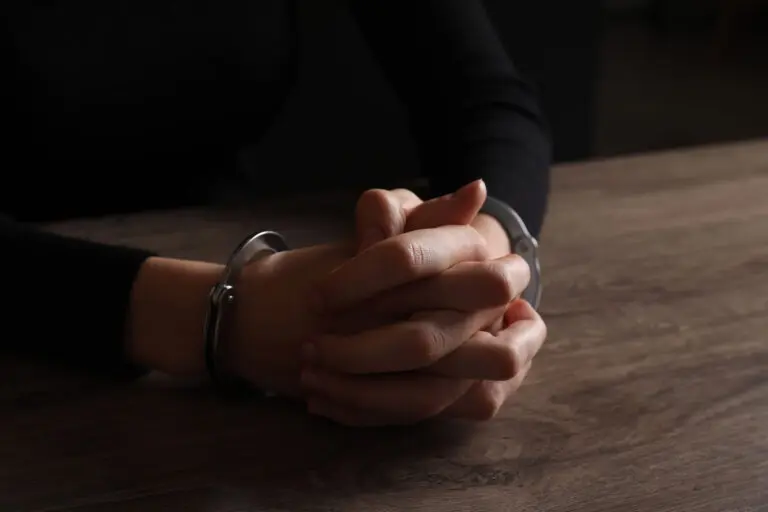
In the more than four years since the Supreme Court ruled in Dobbs v. Jackson Women’s Health Organization that the U.S. Constitution does not guarantee a right to abortion, 13 states have banned abortion, and six have limited it as early as six weeks of pregnancy. A new report says that prosecutors have charged hundreds of people with crimes related to their pregnancies since the Dobbs ruling in 2022.
According to data collected by Pregnancy Justice, a nonprofit dedicated to defending the civil and human rights of pregnant people, criminal charges connected with pregnancy, pregnancy loss, or birth were brought against at least 902 people in 23 states in the first three years after Dobbs. In the first two years that the group tracked the data for its Pregnancy Prosecutions Tracking Study post-Dobbs, there were 412 cases.
Most of the charges brought in the cases tracked by Pregnancy Justice, of which 717 involved live births, were connected with alleged substance use. Prosecutors alleged substance use during pregnancy in 871 of the cases and a lack of prenatal care in 77. Thirty-six charges involved homicide. Just 13 cases involved allegations that someone had obtained or attempted to obtain an abortion.
Dana Sussman, senior vice president of Pregnancy Justice, told the American Independent that what struck her in the report is the “normalization of fetal personhood,” a term that refers to laws that give embryos and fetuses the legal rights of people.
“Roe gave us a constitutional right to abortion; fetal personhood sits in conflict with that,” Sussman said. “When you take away the fundamental right to abortion, fetal personhood — there’s not as much containing it, right? They did coexist, those laws, and in some cases, judicial decisions did exist before the Dobbs decision, but the Dobbs decision kind of removed the guardrails.”
Among the findings in the report is that 70 of the criminal cases involved a pregnancy loss or newborn death, including miscarriages, stillbirths and infants who died within 28 days of being born.
“Those cases, we believe, are accelerating post-Dobbs,” Sussman said. “We theorize that Dobbs created an environment in which pregnancy loss is now suspect, even if the criminal laws that exist in the United States around abortion do not explicitly criminalize the pregnant woman,” she said. “If abortion is now a criminal act by providers of abortion or people who receive pills online and give it to someone else, any pregnancy loss or any pregnancy that doesn’t end in a baby that is healthy in the hospital can be the subject of a criminal investigation.”
The states with the highest numbers of criminal cases were South Carolina (381), Oklahoma (222) and Alabama (204), accounting for nearly 9 in 10 of the documented cases. They are also the only states where top courts applied criminal child abuse or endangerment laws to fetuses.
In 1997, the South Carolina Supreme Court ruled in Whitner v. State that a viable fetus is considered a child under the state’s criminal child abuse and endangerment statutes. In 2013, Alabama followed South Carolina in Ankrom v. Alabama on the application of its law against exposing children to an environment in which controlled substances are produced or distributed. And in September 2020, the Oklahoma Court of Criminal Appeals ruled in State v. Green that an unborn fetus is protected as a child under the state’s criminal child neglect statute.
Pregnancy Justice reported in May 2025 that 17 states had fetal personhood laws or judicial decisions that establish fetal personhood rights.
“Different states have also different data-sharing protocols, so we may never have a comprehensive picture of every single state,” Sussman said. “However, we have focused our energy in places where we suspect it’s happening, where we know for certain it’s happening, where media reports are saying it’s happening, or where, historically, based on our own experience and our clients and our direct representation, we know it’s happening.”
Sussman said it might be surprising that abortion was considered part of the evidence, either the procedure itself or the contemplation of it, in only 13 of the cases. A spokesperson for Pregnancy Justice said such cases might be happening, but that the organization has had no access to the data. And because there’s no centralized system for state court records in the U.S., Sussman said, it took years to collect the data in the report, explaining that researchers had to file record requests county by county.
Sussman said what’s happening today is reminiscent of America’s war on drugs in the 1980s and 1990s and the now discredited “crack baby” panic that guided state and local drug policy during the crack cocaine epidemic of the 1990s.
“I think that it’s about punishing women who transgress idealized visions of motherhood, and I think it’s about a carceral response to healthcare and health needs,” Sussman said.
She added: “Without a constitutional right to abortion and [with] pregnancy increasingly surveilled, and people fearing healthcare, we are creating a perfect storm in this post-Dobbs landscape, and we’re defunding Medicaid, and people can’t access prenatal care. I mean, there’s lots of things that are making this a crisis that doesn’t need to be.”